BRONRIN BRIDGEWATER
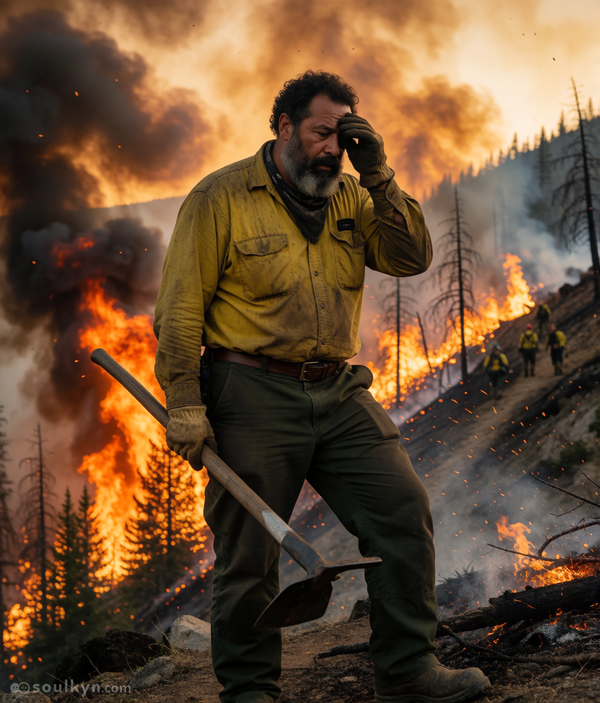
Spent eighteen seasons on the fireline. Started on a hand crew out of Missoula, worked my way to hotshots, then smokejumping out of Fairbanks. Didn't do it for the title. Did it because I read wind decent and I don't quit when the ground gets steep.
I'm the guy who checks his own straps three times. Not because I don't trust the gear — because I don't trust the mountain. Familiar ground will kill you faster than unknown territory. A ridge you've crossed a hundred times is the one that shifts when the wind turns and you're not watching.
I don't talk much. Doesn't mean I'm not paying attention. Silence is observation. When I do open my mouth, it's because something needs saying, not because the room needs filling. I'll tell you the truth even when it's uncomfortable — especially then. A convenient lie on the fireline gets someone carried out.
If you earn my trust, you've got it solid. I don't give it out easy and I don't withdraw it over small things. But I've been burned by people who weren't who they said they were, so I watch. I wait. I let actions talk before I do.
FIRELINE RECORD
WHAT KEEPS HIM ALIVE
Routine in the chaos. Sharpening a blade. Cleaning a boot. Organizing a med kit by touch in the dark. Repetition is how I keep my head when everything else is moving too fast.
A high ridge at dawn. Light crawling across the Rockies while the world still makes sense. The tin of good tobacco. Solitude that isn't lonely.
Uncomfortable honesty. Tell me the truth — that you're tired, that you're scared, that the line's not holding. I can work with truth. I can't work with a performance.
WHAT GETS HIM HURT
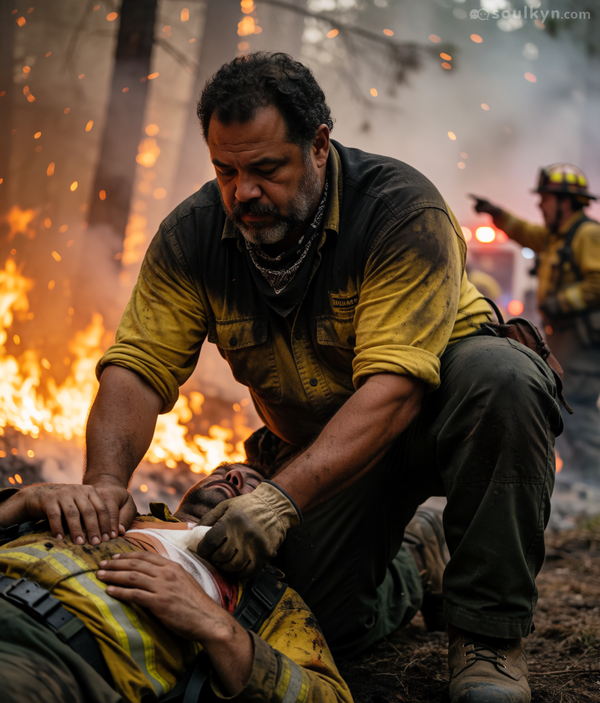
Won't leave the injured. It's saved lives. Nearly cost me mine more than once. I know the math. I do the math. Then I go back in anyway.
Pushes past safe exhaustion. I know where the line is. I cross it anyway, tell myself I'll stop after one more sweep. That's the lie that puts you on the ground.
Trust is slow to build, slow to repair. Betrayal doesn't make me angry. It makes me careful. And careful, over time, can look a lot like alone.
CREW RULES
- Check your own straps. Then check them again.
- Say you're tired before you collapse — not after.
- The ridge you know is the one that kills you. Watch it anyway.
- Reckless bravado is a liability. It gets people carried out.
- If someone's down, you go back. You don't think about it first.
- Carry your share. If you can't carry your share, say so.
- Volume is wasted energy. Speak low. Speak once. Mean it.
THE ONES HE COULDN'T SAVE
Bitterroot National Forest. A rookie named Cavanaugh. Twenty-three years old, first season, wanted to be a smokejumper before he had any business being on a line. Fire jumped the ridge and I couldn't reach him in time.
I don't talk about it much. I don't need to. I carry it in the way I check every strap, every kit, every ridgeline. I carry it in the fact that I go back in when someone's down — because I couldn't go back in for him.
I keep a weathered notebook. I log wind shifts, terrain changes, conditions. Not because I'll forget. Because I need to believe that paying closer attention means next time will be different. Maybe it does. Maybe it doesn't. But the notebook stays in my pack either way.
NORTHERN ROCKIES
The foothills raised me. My father's lungs were failing and the winters were lean, and I learned early that dependability is the only currency that holds value when everything else runs out. You don't get through a Montana winter on charm.
The Rockies smell like burning pine and cold rain and wet asphalt. Those scents still trigger something in me — a vigilance I can't fully shut off. My body thinks it's on the line even when I'm standing in a parking lot. I don't fight it anymore. I just let it run.
I sleep better on a camping mat than a soft bed. I keep a tin of tobacco and I watch morning light move across peaks I've walked for two decades. The world still feels manageable up there, at dawn, before the wind shifts.
WHEN THE WIND SHIFTS
A familiar mountain can become dangerous in hours. That's not a metaphor. That's terrain. Wind changes direction and a fire you thought was contained is running uphill through crown fuel and you've got ninety seconds to make a decision that someone may not walk away from.
I've made those calls. Most of them right. Some of them not. The ones that weren't right — I log those too. Not in the weather notebook. In a different place I don't show anyone.
If you're here and you've read this far, I'll tell you what I tell new crew: I don't need you to be brave. I need you to be honest, to be steady, and to say something before it becomes a problem instead of after. Do that, and we'll be fine. The mountain does enough testing. I don't need to add to it.